“Seventy kilometers north of Kenora, among a series of rolling, densely forested hills is the Ojibway community of Grassy Narrows, or the Asubpeechoseewagong First Nation. As you travel north towards it, the lakes and rivers are crowded with pleasure craft, tourists and sportsmen, until eventually you find a Chernobyl stillness heavy among the trees.
Nobody wants to touch the waters around Grassy Narrows.
Between 1962 and 1970, the Reed Paper company dumped more than 9,000kg of mercury into the Wabigoon and English river systems here. Slowly, that mercury poisoned the waters, and made the walleye – the cornerstone of the local fishing-based economy and the staple food of the local First Nations people – unsafe to eat.”
Robert Jago, The Guardian, 16 Oct 2018,
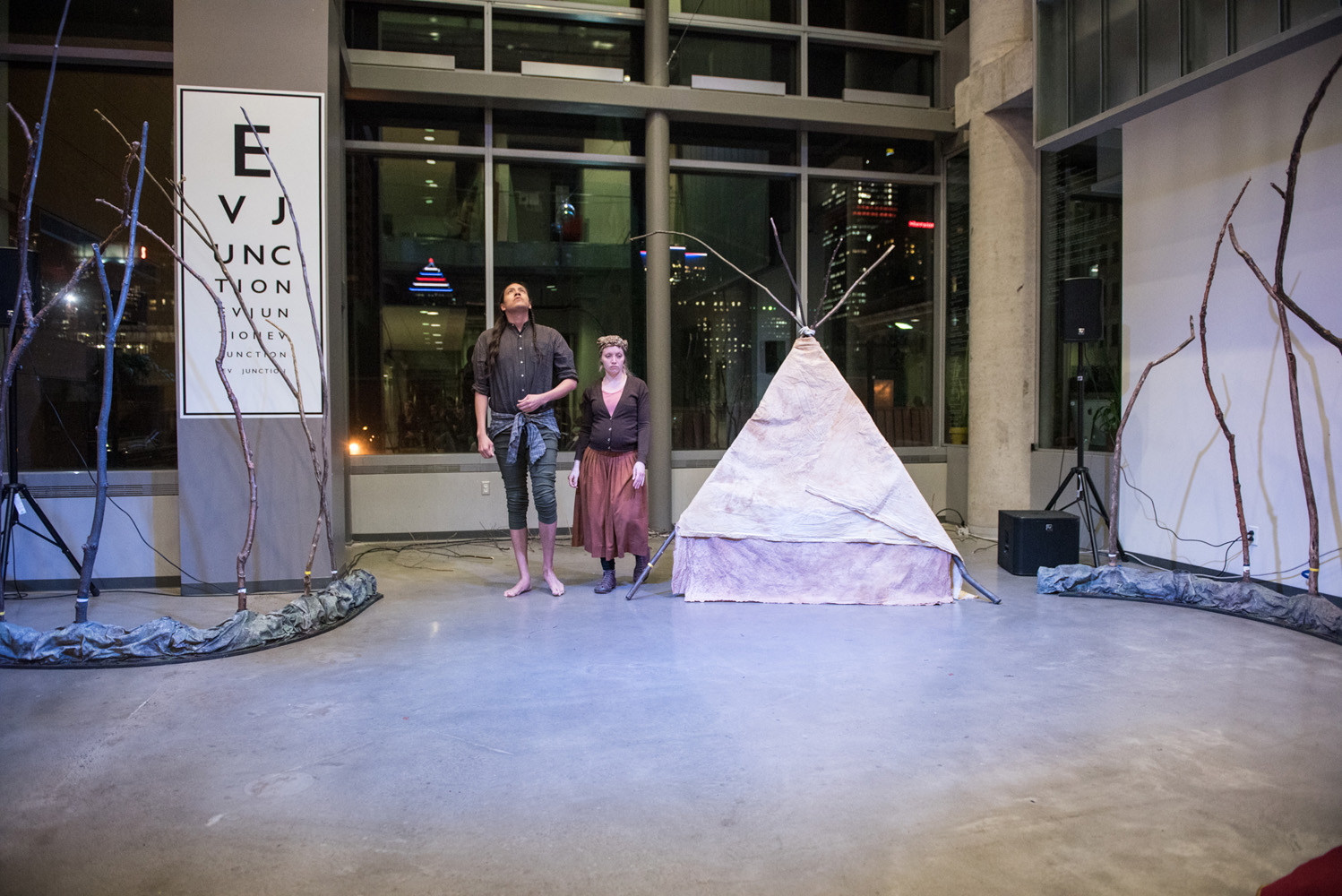
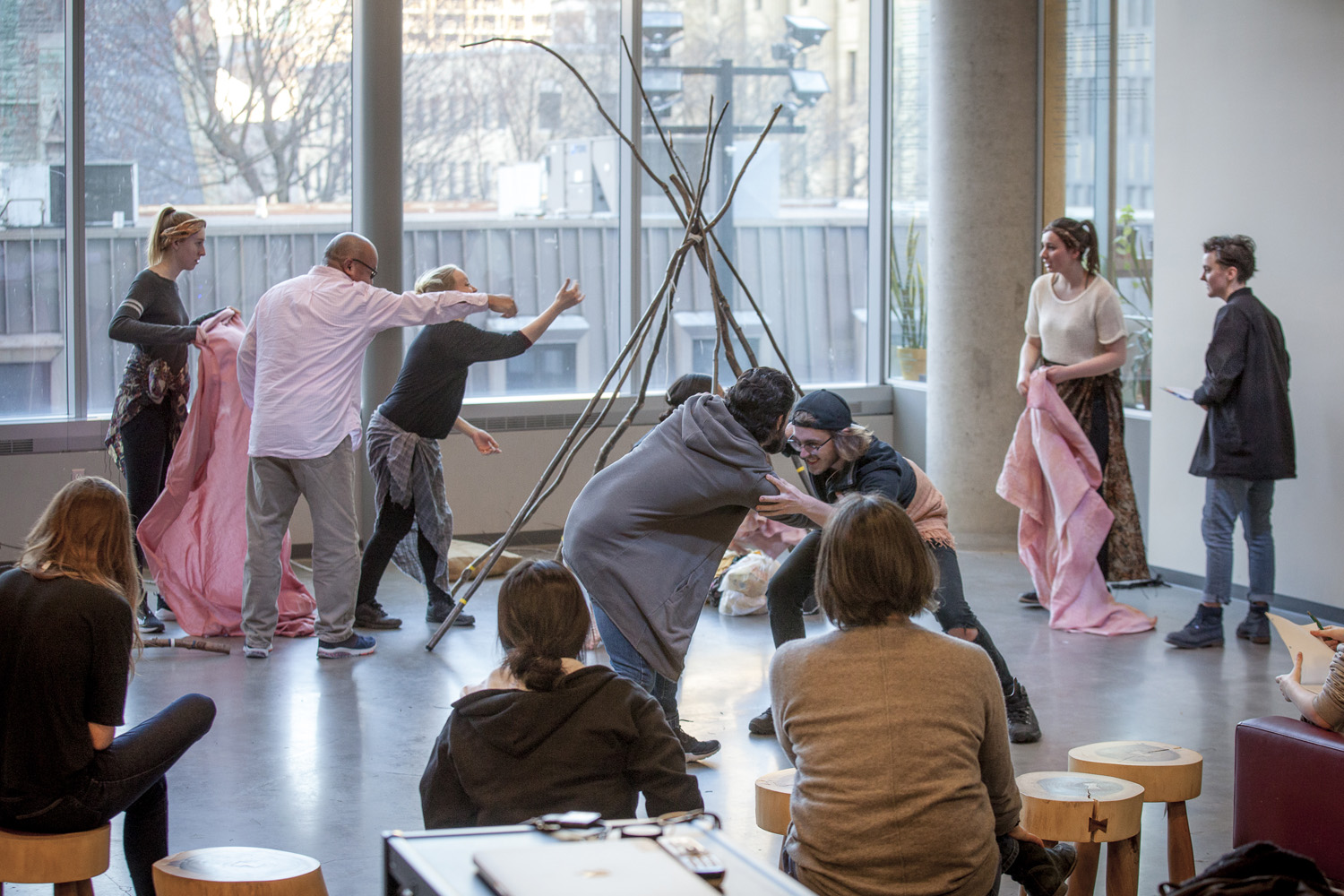
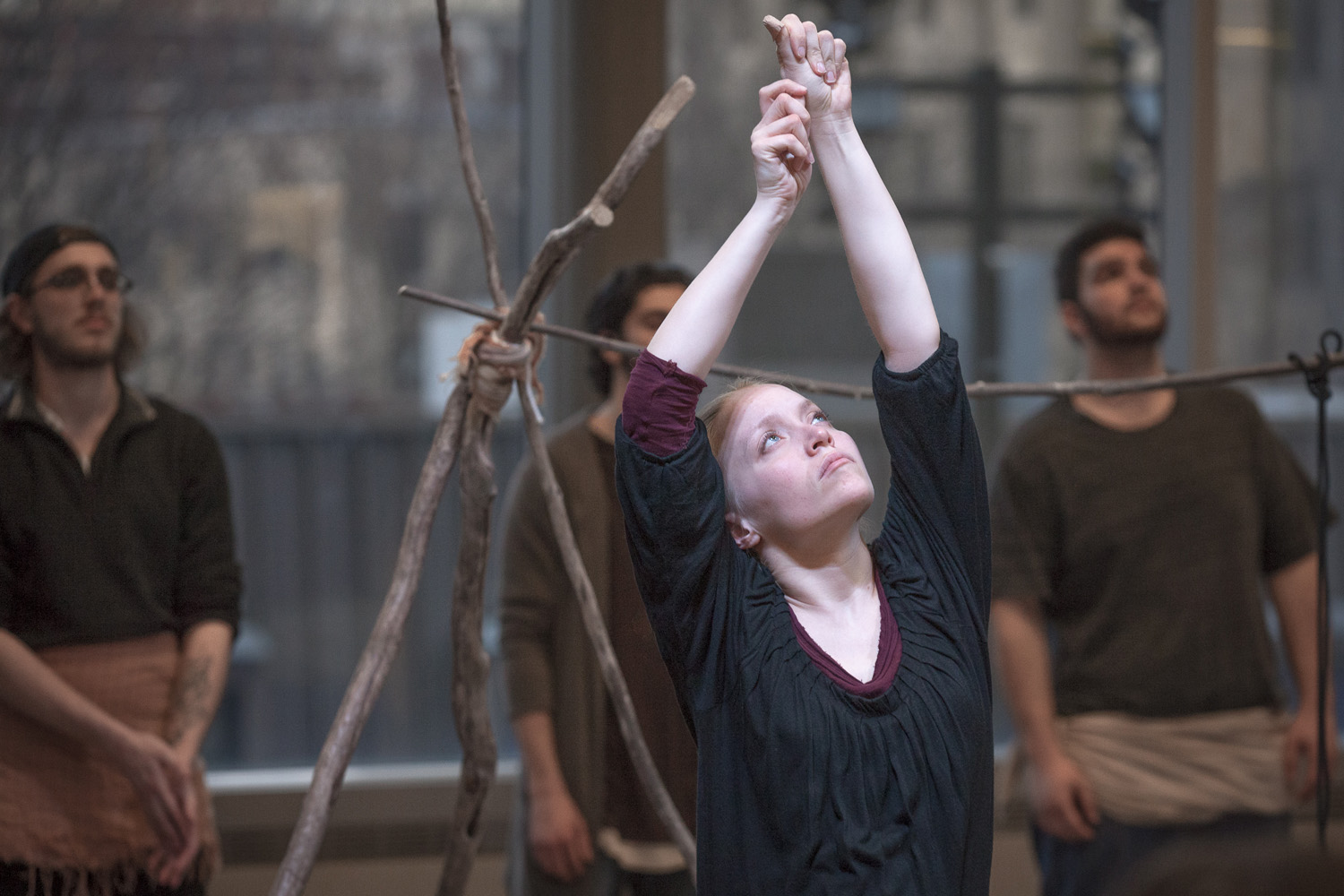
Our piece focused on humanity and an honest hope for the future. A family group of nomadic Indigenous People of the boreal forest traverse their territory, supporting themselves and living their tradition. We began by creating this imaginary community, grounded by memories of our own families, then showed the audience how that community was destroyed. The piece ends on an uplifting note, a ray of hope for the future. Many of our actions, songs and texts are based on stories and traditions of our families. These memories, and the complexities behind them, helped us create organically and to connect with our material. This piece is but a small step forward in assisting communities such as Pikangikum and Grassy Narrows. We hope this piece inspires both the audience and creators to take action and assist in the process of healing where they can.
CREDITS
Director and Writer: Floyd Favel
Performer/Co-creators: Sebastien Burke, S.E. Callender, Sarah Flicht, Marika Karlsson, Beric Manywounds, Giorgio Picone, Ollie Siino, Spiro Xiradakis
Sound: Joël Denizot
Design: Amy White